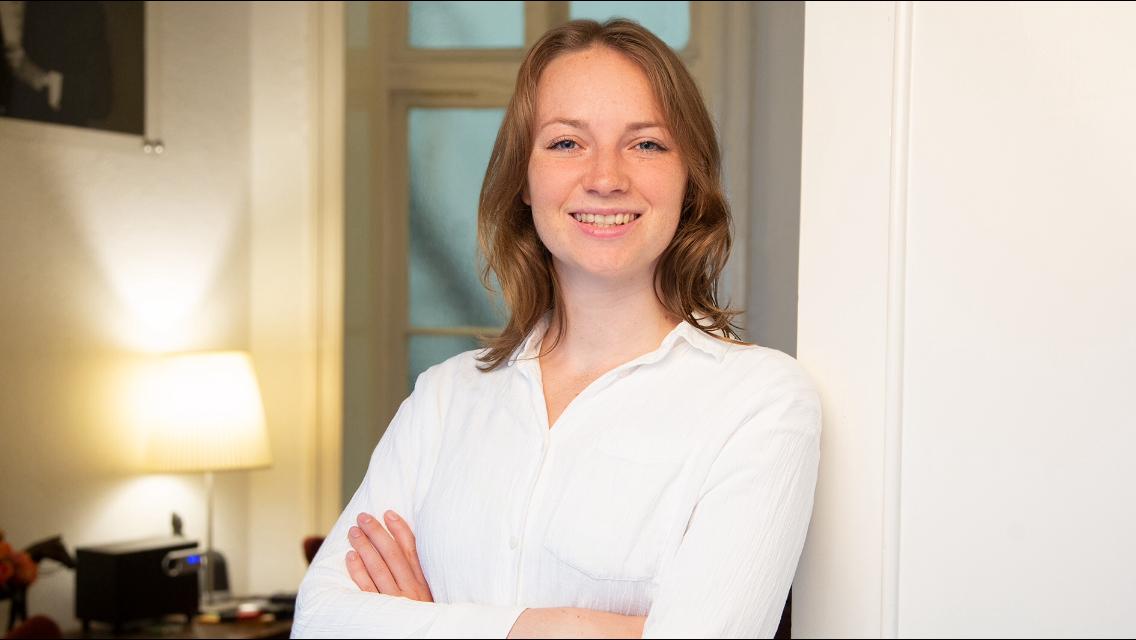
Eight Questions with Hannah Weber-Heidenfels – Art Fair Manager and Curator at Affordable Art Fair
For many emerging artists, making the transition from art school into the professional art market can be a major challenge. Since 2012, the Emerging Artists Exhibition at the Affordable Art Fair has been creating visibility and providing important opportunities for up-and-coming artists. In 2026, ArtButler is proud to support the Emerging Artists Exhibition in Hamburg as a sponsor.
In our “8 Questions” interview series, Hannah Weber-Heidenfels talks about supporting emerging artists, a new generation of collectors, and the role of digitalisation and professional art management in today’s art market.
1. Since 2012, the Emerging Artists Exhibition has provided a curated platform for up-and-coming artists. What was the original idea behind the format – and why is this support still so important today?
The idea behind the Emerging Artists Exhibition is to give artists a curated platform to showcase their work and gain visibility at a challenging stage in their careers. It primarily focuses on young, emerging artists who are not yet represented by a gallery and are either currently studying at an art school or have graduated within the past few years.
What makes the format special is that the artists are not presented in a protected university or exhibition setting, but right in the middle of an art fair. Here, they encounter a diverse audience – from experienced collectors to people who are just beginning to discover contemporary art. The high number of visitors, combined with our press work, creates significant visibility.
This visibility and the opportunity to connect with a wide range of people are important steps towards starting or developing a career in the art world. They do not guarantee a career, but they offer artists the opportunity to be seen, build connections and experience their work in a professional context.
2. You work with many artists at the beginning of their careers. What developments have you observed among former participants – are there artists whose careers received important momentum from the exhibition?
Looking back over the years, the visibility created by these exhibitions has played an important role in helping artists take further steps after participating – from securing their first gallery representation and institutional exhibitions to receiving grants or gaining a stronger presence in the art market.
What I find particularly exciting is how different these paths can be. There is no single trajectory that follows from taking part. Some artists are quickly discovered by galleries, while others initially develop their practice through exhibitions, residencies or institutional projects.
Our anniversary exhibition, “Emerging Artists 2012–2022,” was particularly insightful in this regard. It allowed us to look back over ten years and see how differently the artists and positions we had presented had developed.
I would therefore not say that the exhibition “makes” a career. But through the visibility it creates and the professional context it provides, it can certainly offer an important impulse.
3. You select the artists for the Emerging Artists Exhibition and curate the exhibition. What criteria do you use when deciding which artistic positions to present?
For me, the artistic strength of a work is the most important factor. I look for positions that I find exciting and where I feel there is a distinct voice, a clear question and a strong perspective. There is also, of course, a curatorial aspect: I select and bring together works based on thematic connections.
At the same time, I am interested in how a work functions within a space. The Emerging Artists Exhibition often features large-scale and conceptual works that engage with one another as well as with visitors.
And, of course, a certain willingness to take risks plays a role. With emerging artists in particular, I don’t want to show only what already works and is easily accessible. I am also interested in works that raise questions and may initially challenge or even unsettle visitors.
4. The Emerging Artists Exhibition creates visibility and connections and supports artists as they enter the art market. What can a fair like the Affordable Art Fair offer artists at this early stage of their careers?
An art fair can offer something that is particularly valuable to young artists: it brings many different people together in one place and creates significant visibility. These encounters happen very directly in a fair setting.
It is not just about sales. It is about conversations with collectors, gallerists, curators and other artists – and about experiencing how an audience responds to your work.
Because the Affordable Art Fair aims to make the art market more accessible, it creates an interesting environment: entering the art market does not happen behind closed doors, but in an open and welcoming setting.
5. The Affordable Art Fair is deliberately aimed at people who are just beginning to discover art. What experiences are you having with this new generation of collectors?
I experience a great deal of curiosity – and at the same time, a desire for guidance.
Many people don’t arrive thinking, “I’m a collector now.” They may come because they like a particular work or are simply curious. Then the question suddenly arises: What does it actually mean to buy art? How do I find out what resonates with me?
I find that very exciting. Collecting doesn’t necessarily begin with a large budget or extensive art-historical knowledge. It can start with a single artwork that personally speaks to you.
That is why it is so important for an art fair to create an atmosphere where people feel comfortable asking questions and don’t feel they are expected to already know everything.
6. Many people are interested in art but don’t know how to start their own collection. What role do art education, personal advice and formats such as Art Advisor services play in helping to overcome barriers to collecting?
A very important one. In my view, art education should not be about telling visitors what they should like. It should help them discover what they themselves find interesting.
Especially for first-time art buyers, an independent conversation can be incredibly helpful. It takes the pressure off and turns buying art into a personal experience.
7. How important is digital visibility for young artists today – and what role do online showrooms, art management and art databases play?
Digital visibility is essentially a second exhibition platform for artists today. A physical exhibition can create an important moment – but it is limited in time and space. Online, artists can document their development, exhibitions and work over the long term and reach people who were not able to attend in person.
However, digitalisation should not be confused with social media visibility alone. For a long-term career, good documentation, professional artwork data, a clear exhibition history and a well-maintained digital presence are just as important.
Online showrooms, digital archives, and art management and database systems can help ensure that an artistic practice remains discoverable and traceable beyond the moment of an exhibition.
I therefore see digital tools less as a competition to physical exhibitions and more as their extension.
8. The Emerging Artists Exhibition brings artists, audiences and potential collectors together. What do you hope for the future of supporting emerging artists and for a more open and accessible art market?
I would like to see support for emerging artists understood more strongly as a long-term process rather than a one-time opportunity to present their work. A first exhibition moment is important – but so are the connections and structures that follow. Emerging artists need visibility, opportunities to develop their practice, professional feedback and access to different areas of the art world.
At the same time, I hope for an art market where people can engage with art without feeling intimidated. Complex, challenging art and an accessible art market are not mutually exclusive.
The Emerging Artists Exhibition aims to create exactly this space: showcasing ambitious contemporary art without making visitors feel they need to already be experts. The deliberately quieter, focused space within the fair allows visitors to build their own relationship with the works – and is therefore one of its most important functions for me.
👉 Organise your artworks digitally and discover ARTBUTLER NEXT
👉 Find out more about the Emerging Artists Exhibition 2026 in Hamburg